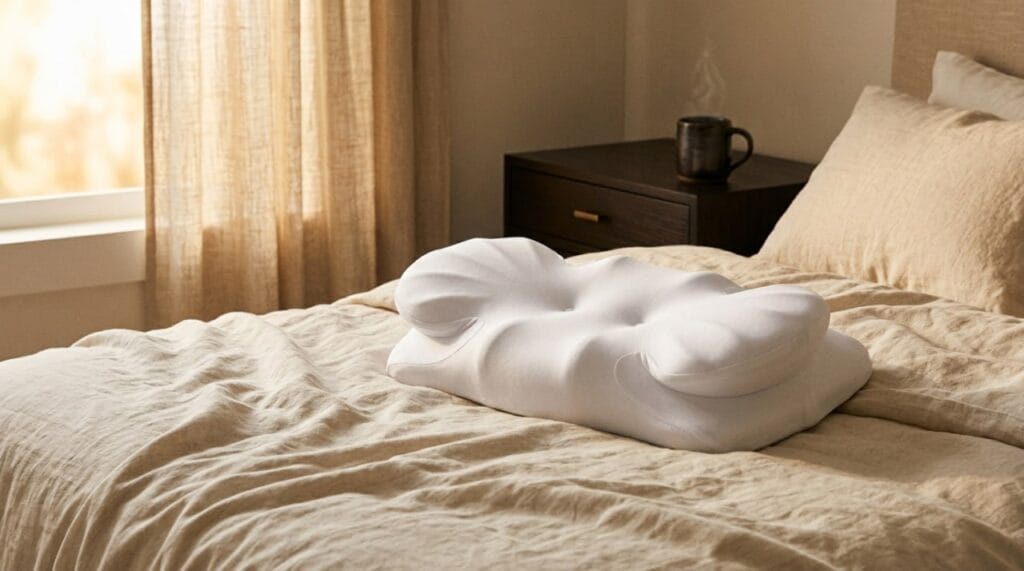
A hugging pillow is a soft, huggable pillow made to be held against the body, and some people enjoy its familiar softness. Holding a comfortable shape can be a reassuring part of an evening routine, though that feeling does not establish a medical benefit. The habit is old and slightly embarrassing to admit. The reason it works is worth understanding, and it is not childish at all.
This is a short, honest guide to why holding helps, how to pick a good one, and what to reach for when you want the pillow to do a little more than lie there.
Why does holding a hugging pillow help?
Some people find the softness and familiar shape reassuring. Others prefer less pressure or a different sleeping position, so comfort is personal rather than a guaranteed bodily response. An article in Psychology Today discusses touch and comfort, but that is not proof that an ordinary hugging pillow changes the stress response. A hugging pillow gives you a way to reach for that feeling on your own, at midnight, without waking anybody.
None of this makes a pillow a treatment for anything. It is simply comfort, the ordinary human kind, made a little more available on the nights you need it.
What makes a good pillow to hug?
Shape, weight, and a cover you can wash. Shape matters most: you want something you can genuinely wrap around, wedge under an arm, or pull into your chest, not a stiff square that fights you. A little weight adds to the grounded, held feeling, which is why some people love a lightly weighted design. The cover should be soft against your face and survive a wash, because a pillow to hug earns its keep and gets used nightly. Size is personal, so match it to how you actually sleep and hold things.
Who uses a hugging pillow?
More people than say so out loud. Side sleepers use one for the physical comfort, and anyone who lives alone knows the particular value of something to hold when the room is dark and quiet. People reach for a hugging pillow when they are missing someone, riding out a hard stretch, or simply want the bed to feel less empty. If it helps you rest and costs no one anything, there is nothing to grow out of. Our guide to stuffed animals for adults makes the same case for the daytime version.
When you want it to hug back
A plain hugging pillow gives you something to hold. The 艾加贝壳智能枕 gives you something to hold that also answers. It has the softness you want against your chest and a warm voice that listens, talks gently, tells stories, and plays calm music when you ask, then rests until you say its name. For a lot of people, holding a pillow was always a stand-in for holding company, and this is that wish, taken one step closer. If you are choosing one for someone who could use the comfort, our gifting page can help.
抱着 AIjia,就不再独自一人。
A hugging pillow is a soft pillow shaped to be held against the body, often long or contoured so you can wrap around it. People use one for physical comfort while sleeping and for the calm, grounded feeling that holding something brings.
Q2: Do hugging pillows really help?
Some people find them soothing because they enjoy the softness and familiar shape. That is a personal comfort preference, not proof that a pillow changes the nervous system or treats stress. It is comfort, not a medical device, and for a lot of people that comfort is exactly enough.
Q3: What is the best hugging pillow?
The best one has a shape you can actually wrap around, a little weight for a grounded feel, and a soft cover that washes. Match the size to how you sleep, and pick the texture you would want against your face at two in the morning.
Q4: Is there a hugging pillow that talks back?
Yes. The AIjia Shell Pillow is a soft companion you hold that also listens and answers in a warm voice, tells stories, and plays calm music. It keeps the comfort of a hugging pillow and adds gentle company for the quiet hours.