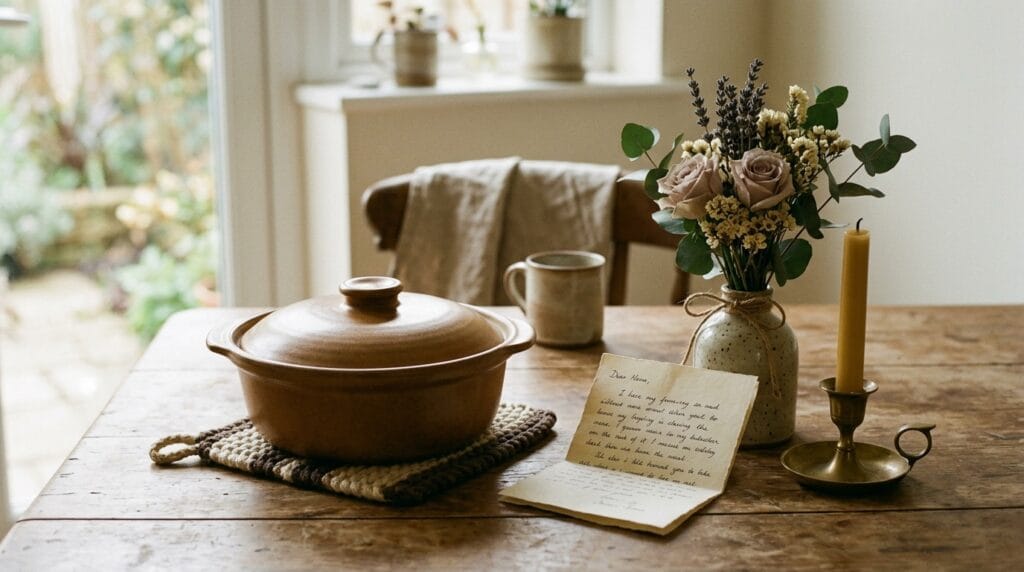
The best sympathy gifts do not try to fix a loss, because nothing can. They do something quieter and truer: they tell a grieving person they are not alone, and they keep saying it after the cards stop arriving. Choosing one is less about the object and more about the message you want still standing in three weeks, when the visitors are gone and the house goes very quiet.
Here is how to choose sympathy gifts that comfort rather than intrude, what to gently avoid, and why the gift you send later may matter most of all.
What are the best sympathy gifts for someone grieving?
The ones that carry presence and ask nothing back. A cooked meal or a meal delivery is among the kindest, because grief makes ordinary tasks like shopping and cooking feel enormous. A short handwritten note that simply says you are thinking of them lands more softly than any grand gesture. Something warm and lasting, a soft blanket, a candle, a keepsake, can sit quietly in the room and keep offering comfort. As Harvard Health notes, practical help and steady presence tend to comfort far more than advice or fixing. The best sympathy gifts are really just presence, made tangible.
What sympathy gifts should you avoid?
Anything that hurries them, and anything that asks for a performance. Skip gifts that carry a “look on the bright side” message, because grief is not a mood to be corrected. Skip anything that creates a chore, like a plant that needs daily care when they can barely get through the day. And be gentle with humor and cheer unless you know it fits the person. When in doubt, choose quiet warmth over anything clever. Quiet warmth never misreads the room.
What do you give when the funeral is over?
Give the gift almost everyone forgets: the one that comes later. In the first week, a grieving person is surrounded. It is week six, and the birthday, and the first holiday, when the quiet is loudest and most people have moved on. A note that lands then, a meal that arrives on a hard anniversary, a message that says I still remember, can mean more than everything sent in the rush of the first days. If the person now lives alone, our guide to gifts for people who live alone was written with these long, quiet stretches in mind.
Something warm for the quiet that follows
In the long quiet after a loss, the hardest hours are often the evenings alone. That is why some families, alongside meals and notes and simply showing up, include something warm that stays close through those hours. A soft companion that keeps gentle company can be part of that care, never a replacement for the people and the time that grief truly needs. If that feels right for someone you love, our gifting page holds a few gentle options.
抱着 AIjia,就不再独自一人。
Something warm and undemanding that carries your presence: a cooked meal or delivery, a handwritten note, a soft blanket or candle, or practical help with everyday tasks. Presence matters far more than price, and a small, heartfelt gift lands better than a grand one.
Avoid anything that rushes their grief or asks them to cheer up, and anything that creates a chore, like a high-maintenance plant. Skip platitudes on cards. When unsure, choose quiet warmth over cleverness, and let the gift simply say you are thinking of them.
Yes, and it is often more meaningful. Support tends to fade after the first week, while grief does not. A note or gift that arrives at week six, or on a birthday or anniversary, can be the one that truly comforts, because it says they have not been forgotten.
Something that eases the long, quiet evenings: prepared meals, a warm blanket, regular check-ins, and gentle company. Some families include a soft companion that keeps quiet company through those hours, alongside the human contact and time that grief most needs.