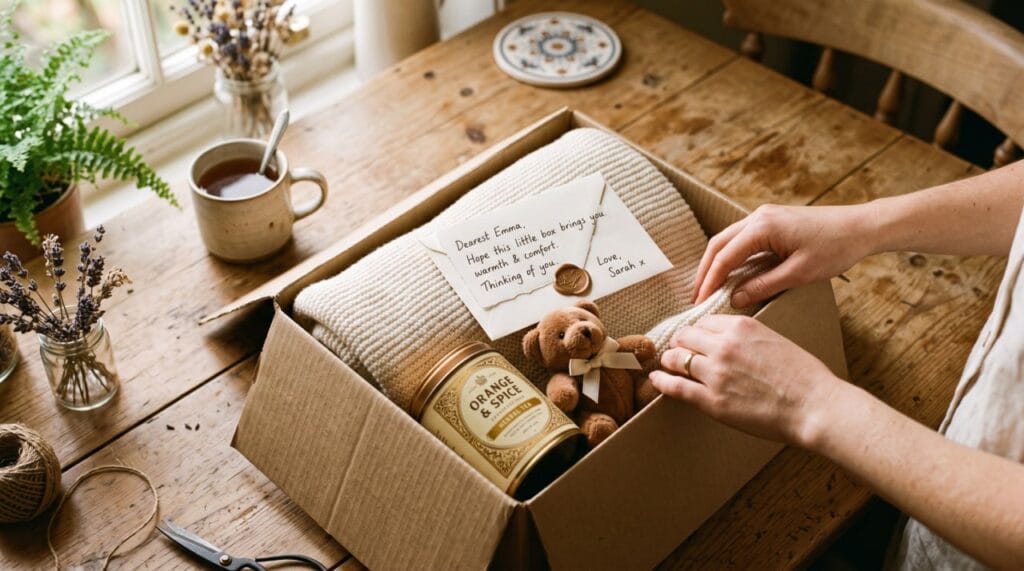
A hug in a box is a care package with one job: to feel like an embrace when you cannot deliver one in person. It is not a gift basket. Baskets are assortments; a hug in a box is a single feeling, packed carefully, and everything inside it should answer to that feeling or stay out.
People send them after losses, before surgeries, during lonely first months in new cities, and sometimes for no occasion at all, which are often the ones that land hardest. Here is how to build one that actually works.
What goes in a hug in a box?
Warmth, softness, and one thing with a voice. Start with something physically warm: a good blanket, thick socks, a mug with proper tea. Add something soft to hold, because holding is what a hug is. A weighted plush works beautifully here, and we wrote about why in our guide to weighted stuffed animals.
Then add the voice. A handwritten letter is the classic, and it belongs on top, first thing they see. Some families now go one further and send company itself: the AIjia Shell Pillow is a soft companion that listens and talks in a warm voice, which makes it the rare gift that keeps saying I’m here long after the box is broken down for recycling.
How do you make a hug in a box personal?
Pack for their evening, not for the camera. Think about their actual nine p.m.: the chair they sit in, what they drink, what the quiet sounds like in their house. A box built around one true detail beats a beautiful one built around none. If she reads herself to sleep, include a bookmark and a note pointing her to something gentle, like our free bedtime stories for adults.
And write the letter by hand, even if your handwriting embarrasses you. Especially then. The imperfection is the proof it came from a person.
When should you send one?
Sooner than feels natural. Most people wait for the right occasion, and the right occasion is usually three weeks after the box was needed most. The best trigger is small: they mentioned a long week, their voice sounded thin on the phone, the anniversary nobody names is coming. Ordinary Tuesdays are underrated sending days, and the National Institute on Aging’s guidance on staying connected makes the same point: regular small gestures do more than rare grand ones.
The box is the message
Whatever you pack, you are really mailing one sentence: I thought about your evenings and I wanted to be in them. Keep everything that says it and remove everything that does not. If you want ideas built entirely around that sentence, our gifting guide collects them in one place.
Let AI enrich life, not only through interaction, but through warmth.
A hug in a box is a care package designed to feel like an embrace from far away: something warm, something soft to hold, and a personal note, packed around one clear feeling rather than assembled as an assortment.
Q2: What do you put in a hug in a box for someone grieving?Keep it gentle and undemanding: a soft blanket, tea, something comforting to hold, and a short handwritten note that asks nothing of them. Avoid anything that requires a thank-you performance. The message is presence, not cheer.
Q3: How much should a hug in a box cost?Whatever one true detail costs. A twenty-dollar box built around the recipient’s actual evening beats a two-hundred-dollar hamper of generic luxuries. Spend on the one item they will use nightly and keep the rest simple.
Q4: Can you send a hug in a box internationally?Yes, but check customs rules for food and candles first, and favor soft, unbreakable items. A blanket, a plush companion, and a letter travel well. Add a tracking number so you can time a call for the day it arrives.