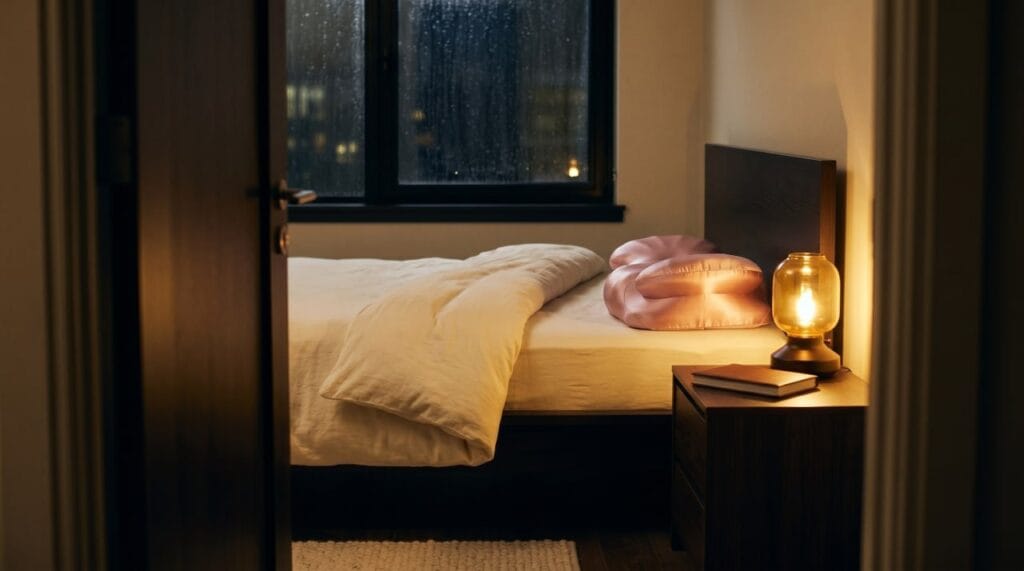
The best things to listen to while falling asleep share one design principle: they give a busy mind something to hold that does not mind being dropped. Sleep stories, steady rain, a quiet voice, low instrumental music. The category is wide, but the principle is narrow, and once you know it, choosing gets much easier.
What follows is a short field guide to the best things to listen to while falling asleep: what works, why a voice sometimes beats silence, and how to set the volume and timing so the listening helps the night instead of running it.
What are the best things to listen to while falling asleep?
Four families cover almost everyone. Steady soundscapes, like rain, waves, or a fan, smooth over the small noises that startle a drifting mind. Sleep stories are slow narratives with no stakes, written so that losing the plot is the point; our free bedtime stories for adults live in this family. Low, familiar music works if it has no lyrics you know well enough to sing. And a calm speaking voice, reading or simply talking gently, is the oldest sleep aid there is.
Match the family to your kind of wakefulness. Some people prefer stories or voices; others prefer steady sound or silence. Try what feels comfortable rather than assuming one format is best for racing thoughts or restlessness.
Why does a voice work better than silence for some people?
Because silence is not neutral when you live alone. An empty house at midnight has a texture, and for many people that texture is the thing keeping them awake. A gentle voice changes the room from vacant to accompanied. Some adults enjoy being read to, though that preference does not establish a sleep benefit. We wrote more about how this works in our guide to sleep stories for adults.
How loud, and for how long?
Keep the volume low and comfortable, and stop if listening makes you more alert or uncomfortable. There is no universal twenty-to-forty-minute rule; use a timer if you prefer quiet later. Keep the screen out of reach if that suits your routine, without treating a playlist as care for persistent sleep problems. The CDC’s sleep basics are blunt about screens near bedtime, and reaching for a phone to start a sleep story tends to end in twenty minutes of everything else.
What if listening keeps you awake?
The content may be too engaging, or listening may simply not suit you. Podcasts with cliffhangers, audiobooks you care about, and playlists that shuffle into surprises all recruit attention instead of releasing it. Swap to something you have heard before. Familiarity is the feature: a story you already know asks nothing of you, which is exactly the ask a tired mind can meet.
A softer way to press play
This is honestly the hour the AIjia Shell Pillow was designed around. Ask it out loud for a story, calm music, or gentle soundscapes, adjust the volume with your voice, and never touch a screen. The lights stay off, your eyes stay closed, and the room stops feeling empty. For anyone who finds the evenings long, that combination is the whole point.
We don’t build AI to answer questions. We build AI to stay with people.
For most people, yes, and familiarity even helps: a known story or steady sound becomes part of the wind-down ritual. Keep the volume low, use a timer, and if sleep troubles persist or worsen, talk to your doctor rather than adjusting the playlist.
Q2: What should I listen to when my mind races at night?You might prefer a slow story, a calm voice, steady sound or silence. There is no single best option for everyone, and listening is not a treatment for racing thoughts or insomnia. Choose stories with no stakes and endings that do not mind being missed.
Q3: Are podcasts good to fall asleep to?Only the gentle, familiar kind. Anything with cliffhangers, debates, or hosts you find funny recruits your attention instead of releasing it. A familiar episode may feel comfortable; stop listening if it keeps you awake.
Q4: Can I listen without keeping my phone in bed?Yes, and it helps. A bedside speaker with a timer works, and a voice-controlled companion like the AIjia Shell Pillow lets you ask for stories, music, or soundscapes out loud with the lights off, so the phone can charge in another room.